Understanding Anxiety Disorders: Symptoms, Types & When to Get Help
Medically reviewed content by Lindsay Mayott, Ph.D., Licensed Psychologist
If your mind races before a meeting, your chest tightens on a bridge, or you've canceled plans because a crowded room feels unbearable, you may be dealing with more than everyday stress. Anxiety disorders are the most common mental health conditions in the U.S., affecting roughly 1 in 5 adults every year and nearly 1 in 3 people at some point in their lives.
This guide covers the core anxiety symptoms to watch for, the main types of anxiety disorders (including phobias), what causes them, and the treatment approaches that work.
What Are Anxiety Disorders?
Anxiety disorders are a group of mental health conditions marked by excessive, persistent fear or worry that doesn't match the actual level of threat in a situation. Everyone feels anxious occasionally — before a job interview, a big exam, or a doctor's appointment. That's a normal, protective response. Anxiety becomes a disorder when the worry is hard to control, lasts for months, and starts interfering with work, relationships, or daily routines.
Clinically, anxiety disorders share a few features: excessive fear of a perceived threat, avoidance behavior, and physical symptoms that show up even when there's no real danger present. Most anxiety disorders develop before age 21, and they're more common in women than in men. The good news is that anxiety disorders respond well to treatment, especially when addressed early rather than left to shape daily decisions for years.
Common Anxiety Symptoms
Anxiety symptoms show up in the body and mind at the same time, which is one reason anxiety is so often mistaken for a physical illness. Recognizing these anxiety symptoms early can make a real difference in getting the right kind of help.
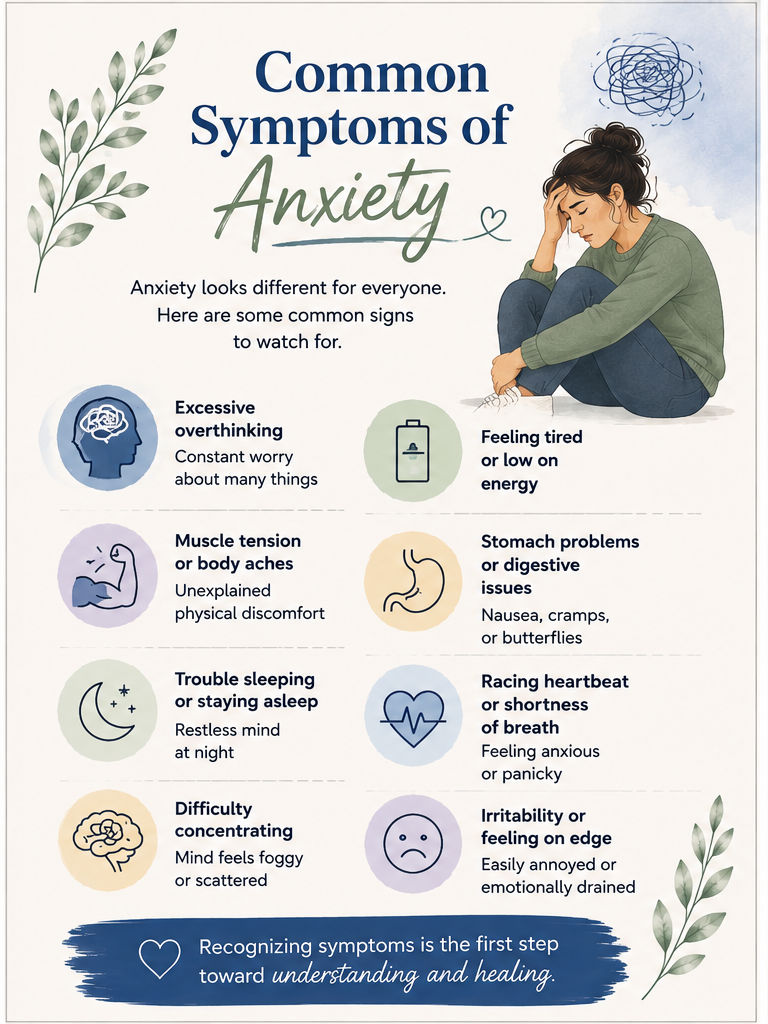
Emotional and cognitive anxiety symptoms:
Persistent, hard-to-control worry
A sense of dread or impending doom
Irritability or feeling "on edge"
Difficulty concentrating or your mind going blank
Trouble sleeping or racing thoughts at night
Physical anxiety symptoms:
Rapid heartbeat or chest tightness
Shortness of breath
Muscle tension, trembling, or restlessness
Sweating, nausea, or stomach upset
Fatigue, even after rest
When these anxiety symptoms occur suddenly and intensely, they can escalate into a panic attack — a surge of fear that peaks within minutes and can feel like a heart attack, even though it isn't one. Some people avoid entire situations just to prevent another episode, which is often how anxiety starts to shrink a person's world.
Types of Anxiety Disorders
Anxiety disorders aren't one single condition — they're a spectrum of related diagnoses, each with its own pattern.
Generalized Anxiety Disorder (GAD) Constant, excessive worry about everyday things — health, finances, work, family — that's difficult to control and lasts six months or longer, often paired with muscle tension and sleep problems.
Panic Disorder Recurrent, unexpected panic attacks along with ongoing fear of having another one. This fear alone can lead someone to avoid places or situations where an attack previously occurred.
Social Anxiety Disorder An intense fear of being judged, embarrassed, or scrutinized in social or performance situations, often leading to avoidance of gatherings, public speaking, or even everyday interactions like eating in front of others.
Phobias Phobias are one of the most common types of anxiety disorders, affecting roughly 8–12% of U.S. adults. A phobia is an intense, out-of-proportion fear of a specific object or situation — heights, flying, driving, needles, or enclosed spaces are frequent examples. Encountering the trigger (or even thinking about it) can bring on full anxiety symptoms: sweating, a pounding heart, and an urge to escape. Many people structure their lives around avoiding the source of their phobias, which usually reinforces the fear over time rather than easing it.

Agoraphobia Fear of situations where escape might be difficult if anxiety symptoms strike — such as public transportation, crowds, or being outside the home alone. In severe cases, agoraphobia can make it hard to leave the house at all.
Separation Anxiety Disorder Excessive fear of being apart from a primary attachment figure. While often associated with children, it can persist into or emerge in adulthood.
Anxiety disorders frequently overlap with one another and with conditions like depression, which is why an accurate diagnosis matters more than a quick label.
What Causes Anxiety Disorders?
There's rarely a single cause. Anxiety disorders typically develop from a combination of:
Genetics — a family history of anxiety increases risk
Brain chemistry — dysregulation in the brain circuits that process fear and threat
Environment — stressful or traumatic events, chronic stress, or major life transitions
Temperament — some people are naturally more prone to worry or behavioral inhibition
Learned patterns — avoidance behaviors that get reinforced over time
Anxiety disorders can also coexist with physical conditions like thyroid problems, so a proper evaluation rules out medical causes first.
When to Seek Help
Occasional worry doesn't need treatment. But it's worth talking to a licensed mental health professional if anxiety symptoms:
Persist most days for several weeks or months
Interfere with work, school, relationships, or sleep
Lead you to avoid places, people, or activities
Come with panic attacks or physical symptoms you can't explain
Feel unmanageable on your own
A licensed psychologist can conduct a clinical evaluation to determine which anxiety disorder (or combination of disorders) is present and rule out other explanations for your symptoms. If you're weighing whether therapy is the right next step, our therapy FAQ page covers what a first session typically looks like.
How Anxiety Disorders Are Treated
The encouraging news: anxiety disorders are highly treatable, and most people see meaningful improvement with the right approach.
Cognitive Behavioral Therapy (CBT) is considered the gold-standard treatment. It helps you identify the thought patterns that fuel anxiety and gradually replace avoidance with more effective coping strategies.
Exposure therapy is especially effective for phobias and panic disorder. It involves gradually and safely facing feared situations so the brain learns they aren't actually dangerous — reducing the anxiety response over time.
Acceptance and Commitment Therapy (ACT) and mindfulness-based approaches teach people to relate differently to anxious thoughts, rather than trying to eliminate them entirely.
Medication, such as SSRIs, is sometimes used alongside therapy for moderate to severe symptoms, in coordination with a prescribing provider.
Most people do best with a combination of approaches tailored to their specific anxiety disorder — which is why working with a therapist experienced in evidence-based treatment matters.
Frequently Asked Questions
Q1 What is the most common type of anxiety disorder?
Specific phobias are the most commonly diagnosed anxiety disorder, followed closely by generalized anxiety disorder and social anxiety disorder.
Q2. Can anxiety disorders be cured?
Anxiety disorders are highly manageable rather than "cured" in a permanent sense. With CBT, exposure therapy, and sometimes medication, most people achieve significant, lasting symptom relief and regain full functioning.
Q3 What's the difference between everyday anxiety and an anxiety disorder?
Everyday anxiety is usually temporary and connected to a specific stressor, while an anxiety disorder involves anxiety or fear that is excessive, persistent, or difficult to control and interferes with daily life. The duration and specific symptoms required for diagnosis vary depending on the type of anxiety disorder.
Q4 Are phobias a type of anxiety disorder?
Yes. Phobias are officially classified as anxiety disorders and involve an intense, irrational fear of a specific object or situation that triggers physical anxiety symptoms and avoidance behavior.
Getting Support for Anxiety Disorders
Living with anxiety disorders can feel isolating, but effective, evidence-based treatment is available. Dr. Lindsay Mayott, Ph.D., specializes in treating panic disorder, phobias, agoraphobia, and generalized anxiety disorder using CBT, ACT, and exposure therapy — helping clients reduce avoidance and reclaim daily life. If you're ready to talk through what you're experiencing, reach out to schedule a consultation.
This article is for educational purposes and isn't a substitute for a clinical evaluation. If you're in crisis or having thoughts of self-harm, call or text 988 (Suicide & Crisis Lifeline) in the U.S.